




Prefer a conversation?
Our team is always available to guide you through the process and ensure your experience is perfectly matched to your preferences.
Our team is always available to guide you through the process and ensure your experience is perfectly matched to your preferences.
Duration
10 Nights
Price
From $20,400
Ship
Silver Endeavour
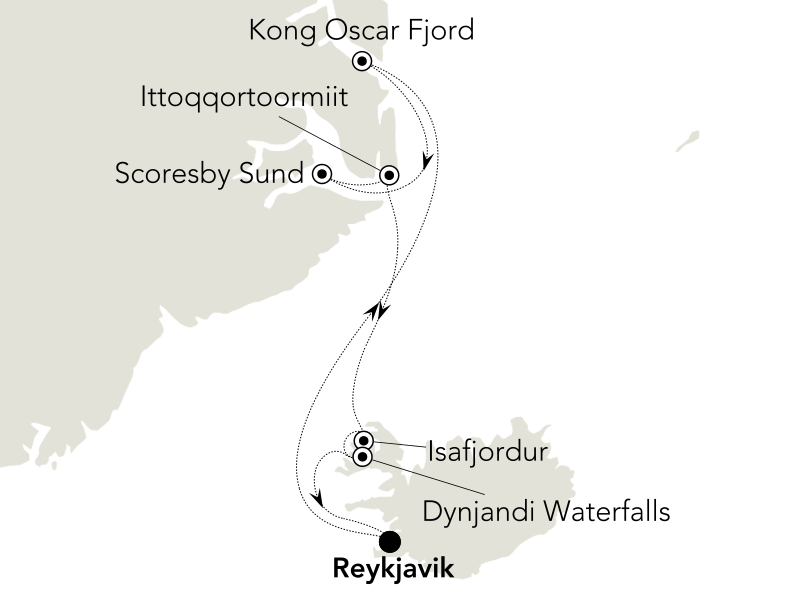
A 10-night expedition voyage aboard Silver Endeavour, Reykjavik, Iceland to Reykjavik, Iceland. Destination: Arctic and Greenland.
Operated by Silversea Cruises aboard Silver Endeavour.
Reykjavik
Kong Oscar Fjord
Scoresby Sund
Ittoqqortoormiit
Isafjordur
Dynjandi Waterfalls
The capital of Iceland’s land of ice, fire and natural wonder, Reykjavik is a city like no other - blossoming among some of the world’s most vibrant and violent scenery. Home to two-thirds of Iceland’s population, Reykjavik is the island’s only real city, and a welcoming and walkable place - full of bicycles gliding along boulevards or battling the wind when it rears up. Fresh licks of paint brighten the streets, and an artistic and creative atmosphere embraces studios and galleries - as well as the kitchens where an exciting culinary scene is burgeoning. Plot your adventures in the city's hip bars and cosy cafes, or waste no time in venturing out to Iceland’s outdoor adventures. Reykjavik’s buildings stand together - below the whip of winter’s winds - together with the magnificent Hallgrímskirkja church, with its bell tower rising resolutely over the city. Iceland’s largest church's design echoes the lava flows that have shaped this remote land and boasts a clean and elegant interior. The Harpa Concert Hall’s sheer glass facade helps it to assimilate into the landscape, mirroring back the city and harbour. Its LED lights shimmer in honour of Iceland’s greatest illuminated performance – the northern lights. Walk in the crusts between continents, feel the spray from bursts of geysers and witness the enduring power of Iceland’s massive waterfalls. Whether you want to sizzle away in the earth-heated geothermal pools, or hike to your heart’s content, you can do it all from Reykjavik - the colourful capital of this astonishing outdoor country.
Days at sea are the perfect opportunity to relax unwind and catch up with what you’ve been meaning to do. So whether that is going to the gym, visiting the spa, whale watching, catching up on your reading or simply topping up your tan these blue sea days are the perfect balance to busy days spent exploring shore side.
Kong Oscar Fjord King Oscar Fjord is a major fjord system in eastern Greenland. With a depth of 110 kilometres and a width of up to 25 kilometres, it marks the border with Scoresby Sund with its superb majesty. You feel very small in the middle of this labyrinth of giant valleys, in the heart of these superb and hostile landscapes, in this mineral and icy environment, between mountain peaks and icebergs. Named in 1899 by explorer and geologist A.G. Nathorst, this gigantic and majestic fjord was named after Oscar II, King of Sweden and Norway. In Danish and Greenlandic, it is known as Kong Oscar Fjord. Arctic wildlife can be seen in the surrounding area, from lemmings and musk oxen to arctic hares and foxes and ptarmigan, or more rarely wolves and polar bears.
Kong Oscar Fjord King Oscar Fjord is a major fjord system in eastern Greenland. With a depth of 110 kilometres and a width of up to 25 kilometres, it marks the border with Scoresby Sund with its superb majesty. You feel very small in the middle of this labyrinth of giant valleys, in the heart of these superb and hostile landscapes, in this mineral and icy environment, between mountain peaks and icebergs. Named in 1899 by explorer and geologist A.G. Nathorst, this gigantic and majestic fjord was named after Oscar II, King of Sweden and Norway. In Danish and Greenlandic, it is known as Kong Oscar Fjord. Arctic wildlife can be seen in the surrounding area, from lemmings and musk oxen to arctic hares and foxes and ptarmigan, or more rarely wolves and polar bears.
Scoresby Sund is the largest and longest fjord system in the world, and exhibits all the natural wonders Greenland has to offer. This labyrinth of islands, fjords and ice boggles the mind at every turn. Named in honour of William Scoresby, the English explorer who mapped the area in 1822, Scoresby Sund today hosts only the small town of Ittoqqortoormiit, although it has been inhabited by many Paleo-Eskimo cultures in the past. The area is incredibly rich in Arctic wildlife, hosting musk oxen, arctic foxes and a wealth of marine life including whales, belugas, narwhals, walrus and seals, as well as several species of sea birds, including King Eiders, Atlantic Puffins and several species of geese which migrate to the area during the fleeting Arctic Summer. It is also one of the best places in the world to see polar bears in their natural habitat, an experience that can never be forgotten. But the scenery is the true highlight of Scoresby Sund. The area is very sheltered, and the waters of the fjords are often glassy and calm, save the vast icebergs which calve off the vast glaciers which drain from the Greenland Ice Sheet into the fjord. Staggering geological variation means no two mountain views are the same, some black, layers and covered with permanent ice, while some are jagged, pinnacled cliffs sweeping out to the fjord to eye-watering heights, crowned with ice that never melts.
Scoresby Sund is the largest and longest fjord system in the world, and exhibits all the natural wonders Greenland has to offer. This labyrinth of islands, fjords and ice boggles the mind at every turn. Named in honour of William Scoresby, the English explorer who mapped the area in 1822, Scoresby Sund today hosts only the small town of Ittoqqortoormiit, although it has been inhabited by many Paleo-Eskimo cultures in the past. The area is incredibly rich in Arctic wildlife, hosting musk oxen, arctic foxes and a wealth of marine life including whales, belugas, narwhals, walrus and seals, as well as several species of sea birds, including King Eiders, Atlantic Puffins and several species of geese which migrate to the area during the fleeting Arctic Summer. It is also one of the best places in the world to see polar bears in their natural habitat, an experience that can never be forgotten. But the scenery is the true highlight of Scoresby Sund. The area is very sheltered, and the waters of the fjords are often glassy and calm, save the vast icebergs which calve off the vast glaciers which drain from the Greenland Ice Sheet into the fjord. Staggering geological variation means no two mountain views are the same, some black, layers and covered with permanent ice, while some are jagged, pinnacled cliffs sweeping out to the fjord to eye-watering heights, crowned with ice that never melts.
Scoresby Sund is the largest and longest fjord system in the world, and exhibits all the natural wonders Greenland has to offer. This labyrinth of islands, fjords and ice boggles the mind at every turn. Named in honour of William Scoresby, the English explorer who mapped the area in 1822, Scoresby Sund today hosts only the small town of Ittoqqortoormiit, although it has been inhabited by many Paleo-Eskimo cultures in the past. The area is incredibly rich in Arctic wildlife, hosting musk oxen, arctic foxes and a wealth of marine life including whales, belugas, narwhals, walrus and seals, as well as several species of sea birds, including King Eiders, Atlantic Puffins and several species of geese which migrate to the area during the fleeting Arctic Summer. It is also one of the best places in the world to see polar bears in their natural habitat, an experience that can never be forgotten. But the scenery is the true highlight of Scoresby Sund. The area is very sheltered, and the waters of the fjords are often glassy and calm, save the vast icebergs which calve off the vast glaciers which drain from the Greenland Ice Sheet into the fjord. Staggering geological variation means no two mountain views are the same, some black, layers and covered with permanent ice, while some are jagged, pinnacled cliffs sweeping out to the fjord to eye-watering heights, crowned with ice that never melts.
In the 1920s the sparsely settled coast of East Greenland had too many families living in Ammassalik (today’s Tasiilaq) for the hunting grounds available and in 1925 Scoresbysund was chosen to start a new settlement with some 70 Inuit from Ammassalik and four families from West Greenland. Less than 10 kilometers from the entrance to the Scoresbysund system, Ittoqqortoormiit (“Big House Dwellers”) lies on the southern tip of Liverpool Land, a low and rounded area compared to the steeper mountains further south or into the fjord system. Some 460 inhabitants call Ittoqqortoormiit, one of Greenland’s most isolated settlements, their home. Not counting the military and civilian researchers at Daneborg, Northeast Greenland, their closest neighbors actually live in Iceland. Although Greenland’s hottest hot springs are located some 8 kilometers south of Ittoqqortoormiit, the village is frozen in some nine months of the year and access to other parts of the country can only be done via the Nerlerit Inaat Airport at Constable Point some 38 km to the north with flights to Iceland and West Greenland. The former village’s shop serves as a small museum and features historic photographs and costumes and shows what a typical hunter’s home from the 1960s looked like. Today hunting narwhals, seals, polar bears and muskoxen is still an important part of the life, but tourism is gaining importance.
Dwarfed by the gargantuan terraces of sloping mountains around it, Isafjordur hangs on to a spit that rolls out into the scenic fjord waters of the Skutulsfjörður. A population of 2,600 calls this remote, beautiful location in the Westfjords Peninsula home. The setting is colossal and otherworldly, with plunging mountains and gouged fjords jutting inland, but there's a lively feel in town, with an abundance of cafes and restaurants dotted between pretty, half-timber houses. Built on the waters of a deep natural harbour, sea-faring and fishing is written into the DNA here. Delve into these central traditions at the Maritime Museum, before getting a taste for Icelandic specialities like the divisive delicacy of fermented shark meat. Rich, troll-inspired folklore and feisty festivals add even more colour and intrigue throughout the year – from mud football mayhem to cross country skiing exhibitions. A place to get active and involved, hook fish from the frozen depths while ice fishing, strap on skis in powder-coated mountains, or crack golf balls along rolling courses while soaking in the gorgeous scenery. The wedding-veil falls of Tungudalur Valey Waterfall are close by, splashing down the blackened rocks. Further afield, Hornstrandir Nature Reserve's emerald marshes and wildflower sprinkled cliffs make for a refreshing shock of colour amid Iceland's moody, brooding monochrome palette. Excellent birdlife is waiting offshore on Vigur Island, where puffins and arctic terns chatter, and traditional farming traditions are kept alive.
Iceland is well-known for its spectacular waterfalls. The iconic Dynjandi waterfall, located in the Westfjords region, is regarded as one of Iceland’s most impressive and majestic waterfalls. At the top, the cascading water is roughly 100 feet wide and tumbles down about 330 feet into the fjord. Its name Dynjandi means, “the thundering one” and its vast size, enormous sound, and sheer force is overwhelming. It has also been nicknamed, ‘The Bridal Veil’ because of the way the water sprays and spreads over the rocks.
The capital of Iceland’s land of ice, fire and natural wonder, Reykjavik is a city like no other - blossoming among some of the world’s most vibrant and violent scenery. Home to two-thirds of Iceland’s population, Reykjavik is the island’s only real city, and a welcoming and walkable place - full of bicycles gliding along boulevards or battling the wind when it rears up. Fresh licks of paint brighten the streets, and an artistic and creative atmosphere embraces studios and galleries - as well as the kitchens where an exciting culinary scene is burgeoning. Plot your adventures in the city's hip bars and cosy cafes, or waste no time in venturing out to Iceland’s outdoor adventures. Reykjavik’s buildings stand together - below the whip of winter’s winds - together with the magnificent Hallgrímskirkja church, with its bell tower rising resolutely over the city. Iceland’s largest church's design echoes the lava flows that have shaped this remote land and boasts a clean and elegant interior. The Harpa Concert Hall’s sheer glass facade helps it to assimilate into the landscape, mirroring back the city and harbour. Its LED lights shimmer in honour of Iceland’s greatest illuminated performance – the northern lights. Walk in the crusts between continents, feel the spray from bursts of geysers and witness the enduring power of Iceland’s massive waterfalls. Whether you want to sizzle away in the earth-heated geothermal pools, or hike to your heart’s content, you can do it all from Reykjavik - the colourful capital of this astonishing outdoor country.
From $20,400
per guest · 10 nights
Prices are a guide and vary with season, cabin category and party size. Your advisor will confirm the exact cost before anything is booked.
Classic Veranda
suite
Deluxe Veranda
suite
Grand 1 Bedroom
suite
Owner 1 Bedroom
suite
Premium Veranda
suite
Silver
suite
Superior Veranda
suite








